
100 mm vs. 150 mm Dome Ports: Which Size Is Right for You?
If you are looking for better over-underwater photos with a GoPro, DJI Osmo Action, Insta360, or another action camera, you have probably noticed that dome ports come in different sizes.
Two common options are 100 mm mini domes and larger 150-160 mm domes.
So, is a 150 mm dome automatically better because it is bigger?
Not necessarily.
The size of a dome affects how it behaves in the water, how forgiving it is in difficult shooting conditions, and how easy it is to travel with. The right choice depends largely on how and where you plan to use it.
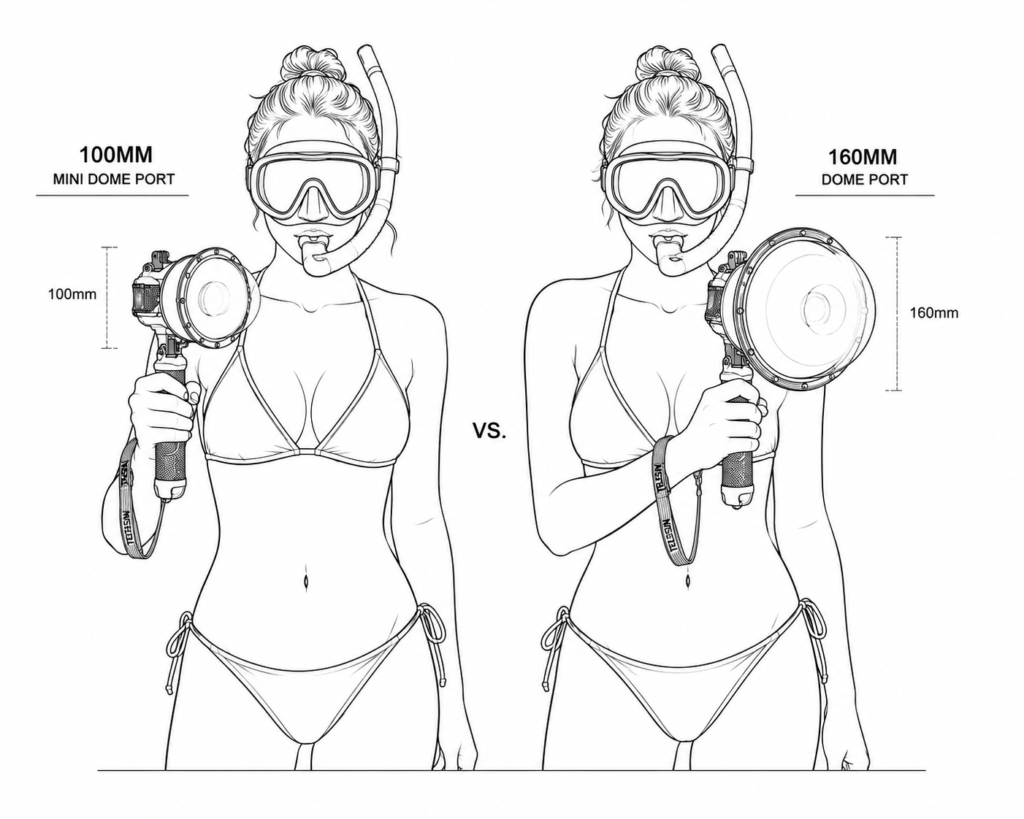
What Does a Dome Port Actually Do?
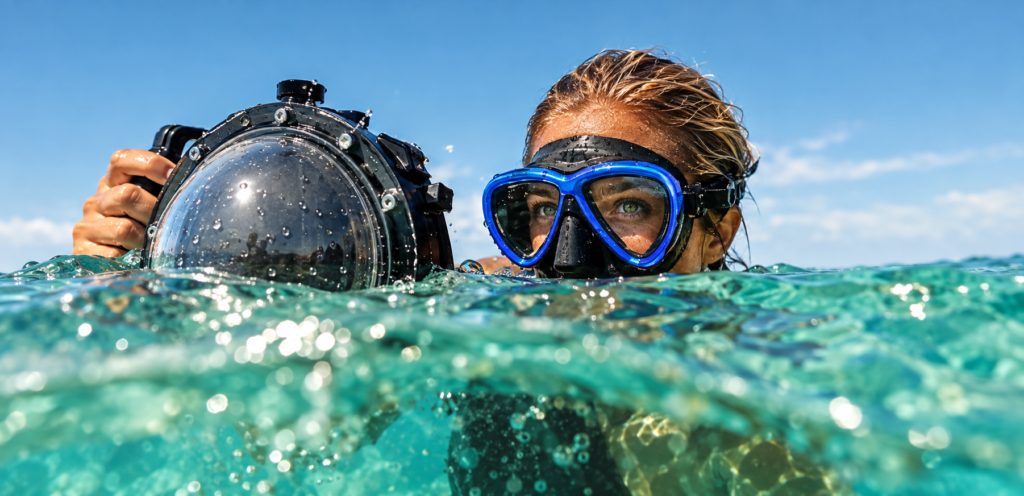
A dome port creates the space needed between the camera lens and the water surface to produce the classic 50/50 over-underwater image.
In a successful split-level photograph, part of the image is above the water and part is below it. The dome helps separate the water surface from the camera lens and creates a much cleaner transition between the two environments.
For action cameras, a dome port can turn an ordinary underwater camera setup into a creative tool for capturing:
- 50/50 over-underwater photos
- Split-level videos
- Swimmers above and below the surface
- Surfers and waves
- Marine life
- Pools and beaches
- Creative travel and adventure photography
But the size of the dome makes a difference.
100 mm Mini Dome vs. 150 mm Dome - Comparison table
A 100 mm dome, such as the SJPRO Mini Dome, is considerably smaller than a traditional 150 mm dome.
That difference may look relatively small on paper, but it can make a noticeable difference when carrying and using the camera.
| Feature | 100 mm Mini Dome | 150 mm Dome |
|---|---|---|
| Size | Compact | Larger |
| Weight | Generally lighter | Generally heavier |
| Travel | Excellent | Less convenient |
| Packing | Easy | Requires more space |
| Handling in water | Easy | More cumbersome |
| 50/50 photography | Excellent | Excellent |
| Rough-water tolerance | More demanding | More forgiving |
| Droplets/reflections | Can be more noticeable | Generally more forgiving |
| Price | Generally lower | Generally higher |
| Best suited for | Travel & action | More demanding photography |
Neither size is universally better. They are designed around different priorities.
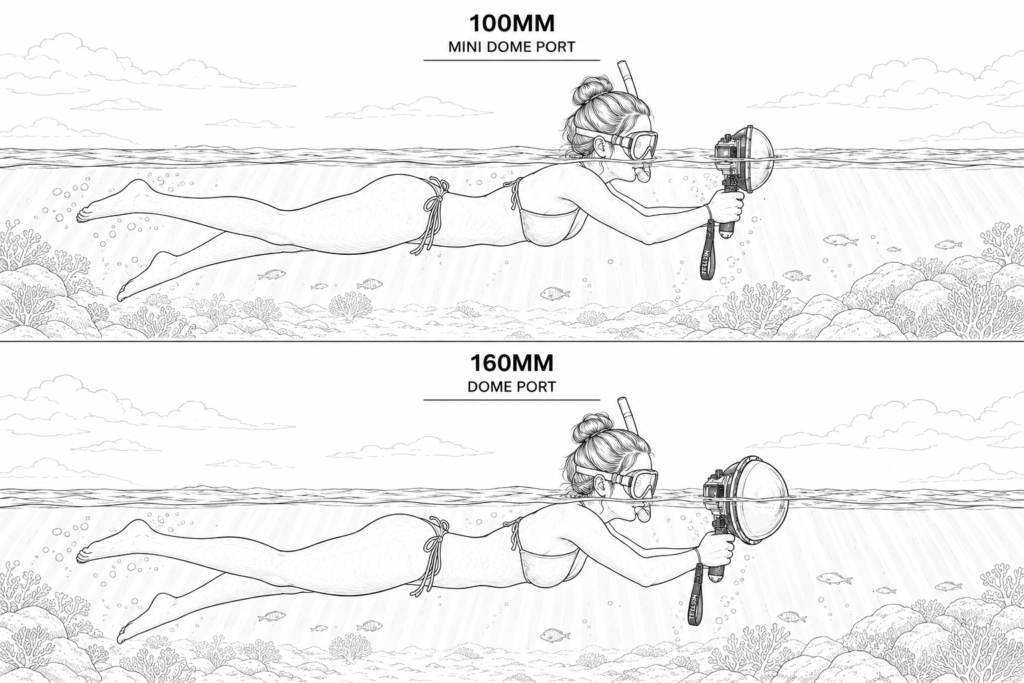
The Advantages of a 100 mm Mini Dome
1. Smaller and Easier to Travel With
One of the biggest advantages of a 100 mm dome is simply its size.
When you’re traveling, every piece of equipment takes up space. A large dome can be awkward to fit into a backpack or camera bag, particularly when you are already carrying a camera, waterproof case, batteries, chargers and other accessories.
A 100 mm mini dome is much easier to pack.
For travelers, snorkelers and action-camera users who want to keep their equipment compact, this can be a major advantage.
2. Lightweight and Easy to Handle
A smaller dome is generally easier to hold and maneuver in the water.
This becomes particularly useful when you’re swimming, snorkeling, surfing or shooting with one hand.
You can quickly change the camera angle, move around a subject and reposition the dome without having to manage a large piece of equipment.
For action-camera photography, where movement is often part of the shot, this can be important.
3. Ideal for Travel and Adventure Photography
Most action-camera users are not carrying a professional underwater camera system.
They want something that can fit in their luggage and be ready when an opportunity appears.

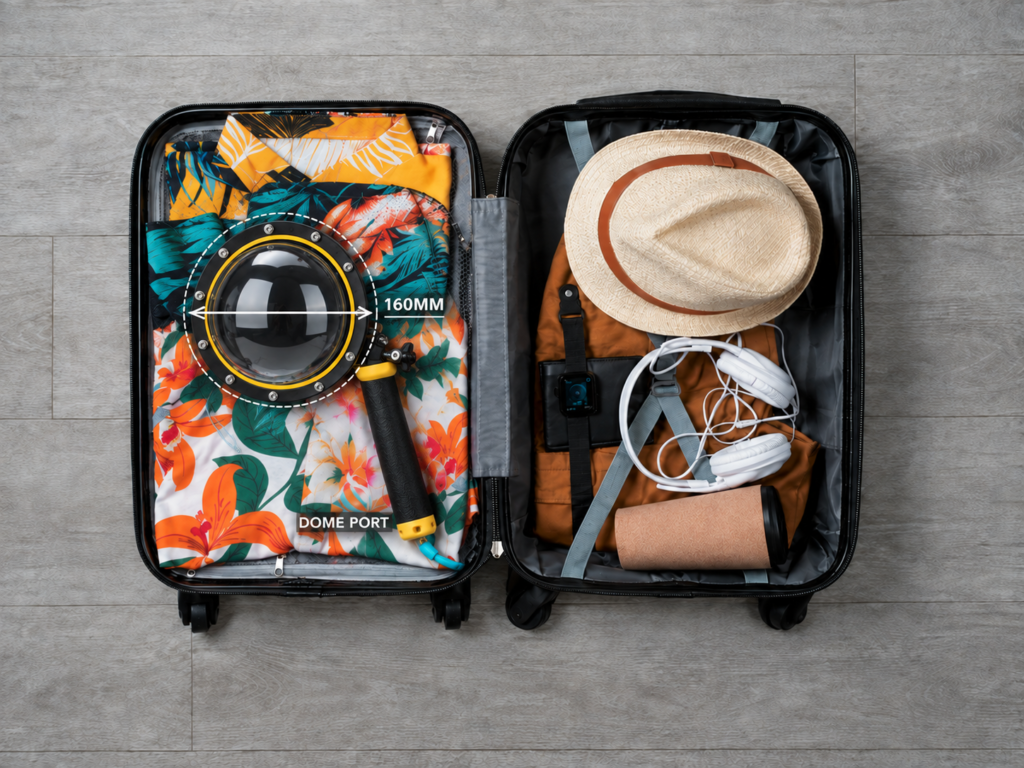
A 100 mm dome fits this philosophy very well.
It can be used for:
- Vacation photography
- Snorkeling
- Swimming
- Surfing
- Paddleboarding
- Kayaking
- Pool photography
- Beach photography
- Travel videos
- Family and adventure photography
The result is a setup that is much easier to carry without giving up the ability to create dramatic 50/50 images.
4. More Accessible Price
Larger dome systems can become expensive, particularly when they are made from premium materials and designed for professional underwater photography.
A smaller dome can provide a more accessible way for action-camera users to experiment with split-level photography without investing in a large professional system.
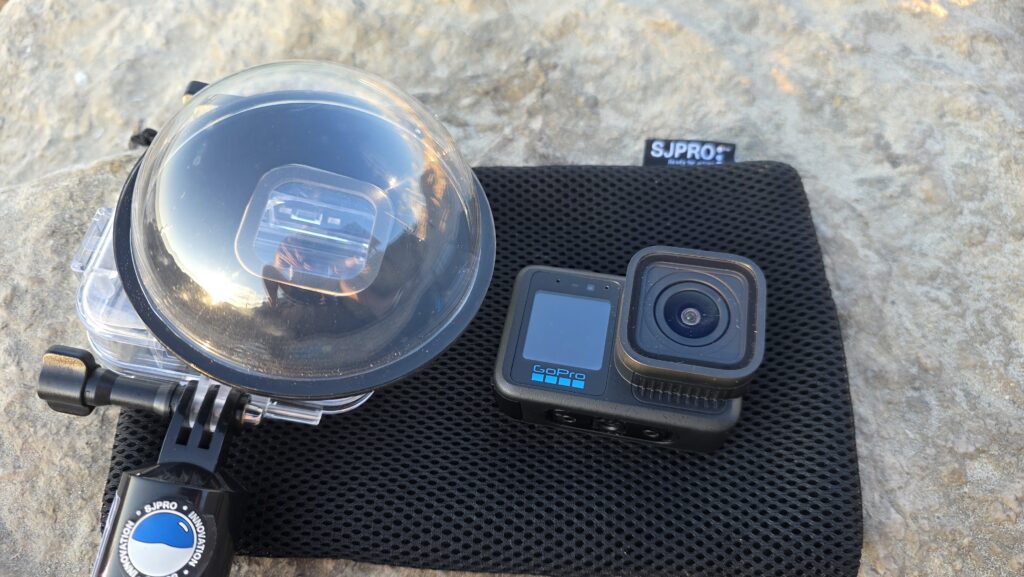
Where a 150 mm Dome Has an Advantage
The larger 150 mm dome isn’t simply unnecessary. It has some important advantages, particularly for photographers who regularly shoot in challenging conditions.
1. Greater Tolerance in Rough Water
This is one of the most important differences.
When the water is calm, a 100 mm dome can produce excellent 50/50 images.
But when the surface becomes rough, waves and movement make it more difficult to create a clean waterline.
A larger dome generally provides more surface area and greater tolerance when positioning the camera relative to the water surface.
For photographers who frequently shoot in waves or changing conditions, the additional size can be useful.
2. More Forgiving With Water Droplets
Water droplets are one of the biggest challenges in split-level photography.
A single large drop in the wrong location can partially obscure the subject or create an unwanted distortion.
A larger dome gives the photographer more usable surface area around the camera lens and can provide more flexibility when composing an image.
That doesn’t mean a 150 mm dome is immune to droplets. Proper dome preparation and water management are still important.
However, the larger dome can be more forgiving.
3. Better Tolerance in Difficult Lighting
Direct sunlight can create reflections and unwanted highlights on a dome.
This can be particularly noticeable when shooting toward the sun or when the sun is low over the water.
A larger dome can provide greater optical tolerance in some of these situations.
The difference isn’t that a 150 mm dome automatically produces sharper images. Rather, the larger dome can make certain challenging shooting conditions easier to manage.
Does a 150 mm Dome Produce Better Image Quality?
This is an important question.
Bigger does not automatically mean better image quality.
The final image depends on many factors, including:
- The quality of the dome material
- Dome shape and optical design
- The camera lens
- The distance between the camera lens and dome
- Manufacturing accuracy
- Water clarity
- Lighting conditions
- Water movement
- Camera settings
- Scratches, dirt and water droplets on the dome
A well-designed 100 mm dome can produce excellent images.
The primary advantage of a larger dome is not necessarily higher image quality. It is greater tolerance in challenging conditions.
That distinction is important.
When Should You Choose a 100 mm Dome?
A 100 mm mini dome is a particularly good choice if you value:
Portability
You want something that fits easily into your travel gear.
Low weight
You don’t want a large dome weighing down your camera setup.
Convenience
You want to quickly take your camera into the water and start shooting.
Adventure photography
Your photography includes swimming, snorkeling, surfing, kayaking or travel.
50/50 photography
Your primary goal is creating split-level images and videos.
Value
You want the benefits of a dome without investing in a larger professional system.
For these users, the smaller size can actually be a significant advantage.
When Should You Consider a 150 mm Dome?
A larger dome may make more sense if you regularly:
- Shoot in rough or moving water
- Work in difficult lighting
- Shoot professionally
- Need maximum tolerance when composing 50/50 images
- Don’t mind carrying a larger setup
- Prioritize optical flexibility over portability
For dedicated underwater photographers, the additional size can be worth the extra space and weight.
The Real Difference: Portability vs. Tolerance
Ultimately, the choice between a 100 mm and 150 mm dome comes down to a trade-off.
100 mm
Smaller → lighter → easier to travel → easier to handle
150 mm
Larger → more forgiving → better suited to demanding conditions
Neither is automatically the right choice for everyone.
If your priority is travel, adventure and convenience, a 100 mm mini dome offers a very attractive balance.
If your priority is maximum tolerance in challenging shooting conditions, a larger 150 mm dome may be more appropriate.
Why SJPRO Developed the 100 mm Mini Dome
The SJPRO Mini Dome was designed around a simple idea:
You shouldn’t need to carry a large professional dome just to capture great 50/50 action-camera images.
The 100 mm format provides a compact alternative for action-camera users who want to combine above-water and underwater scenes in a single image.
Its smaller size makes it easier to carry, easier to handle and better suited to travel, while still providing the characteristic split-level perspective that makes dome photography so unique.
For many GoPro, DJI Osmo Action and other action-camera users, that balance between size, weight, convenience and image capability is the real advantage.
Final Thoughts
Choosing between a 100 mm and 150 mm dome isn’t simply a question of which one is bigger.
A 150 mm dome can be more forgiving, particularly in rough water, difficult lighting and demanding photographic conditions.
A 100 mm dome can be more practical, especially when portability, weight and convenience matter.
For the traveler, snorkeler, surfer or everyday action-camera user, a compact 100 mm dome can offer an excellent balance: enough size to create impressive 50/50 images, without turning your action camera into a bulky underwater photography system.
The best dome is ultimately the one that matches the way you actually shoot.
Frequently Asked Questions
What is 100 mm vs. 150 mm Dome Ports - Mini Dome vs. Normal Dome about?
This page covers 100 mm vs. 150 mm Dome Ports - Mini Dome vs. Normal Dome.